In recent years, concepts such as real-time visibility, predictive analytics, and logistics intelligence have dominated strategic conversations within the industry. However, a key question remains: is logistical predictability truly attainable, or does it remain a romantic ideal?
What does “predictability” actually mean?
Predictability in logistics does not simply mean knowing where a shipment is; it means anticipating what will happen before it occurs:
- When your product will arrive.
- Where disruptions might arise.
- What decisions to make to minimize impact.
- How to optimize routes, resources, and costs.
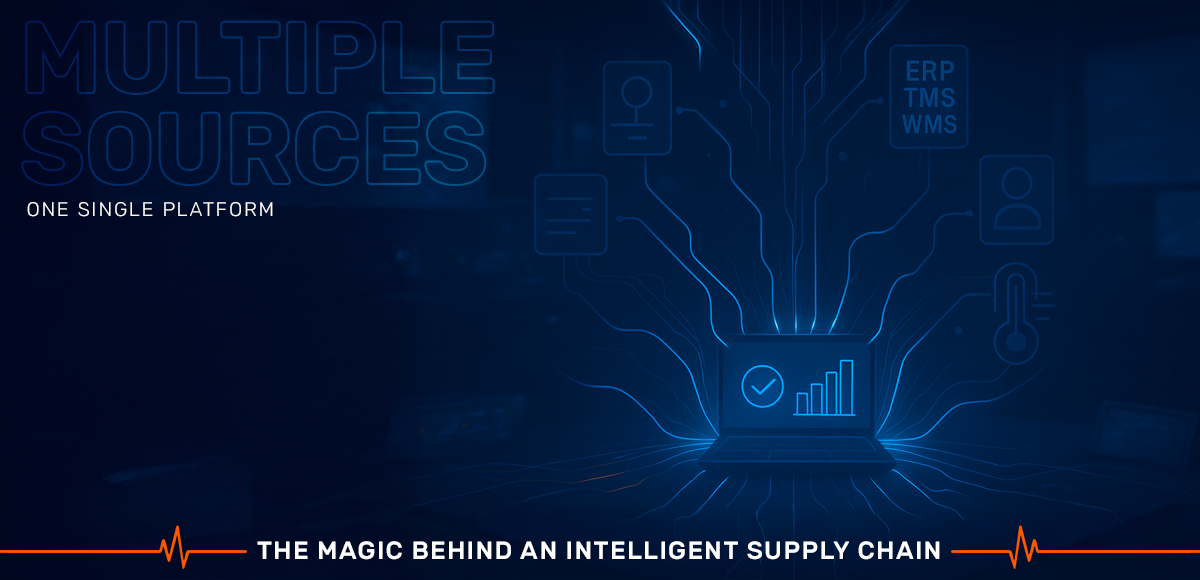
This involves integrating data from multiple sources (TMS, ERP, GPS, carriers, IoT sensors) and transforming it into reliable information that enables proactive, rather than merely reactive, actions.
Leading tech voices say it is possible
Gartner’s research and their market analysis of Real-Time Transportation Visibility Platforms (RTTVP) show that these solutions are not only currently in use but are central to modern logistics strategies. Gartner considers real-time visibility a strategic priority for both shippers and providers.
Furthermore, leading providers are investing in advanced capabilities that go beyond simple tracking: predictive analytics, artificial intelligence, and automation. These capabilities allow for anticipating disruptions, recalculating routes, and suggesting concrete actions with a positive operational impact.
But… is it truly “predictive” or just “informative”?
Predictability does not happen automatically by having more data; it requires quality data, mature processes, and intelligent tools.
Gartner identifies that the true competitive advantage lies not just in viewing real-time data, but in converting it into impactful decisions and actions. This means moving:
- From operational visibility (knowing where a shipment is).
- To predictive visibility (knowing what is going to happen).
- And finally, to predictive execution (being able to act automatically based on that prediction).
This is what distinguishes organizations that merely “observe” logistics from those that truly control and anticipate their operations.
Myth or Reality? The evidence points to reality… with conditions
✔ RTTVPs are already transforming global logistics operations, reducing operational errors, and improving coordination between partners.
✔ Tech leaders confirm that the RTTVP market is growing and adding AI-based predictive analysis capabilities.
✔ Companies adopting these solutions are already making decisions before disruptive events occur, reducing risk and increasing efficiency.
However, it is neither magic nor instantaneous. Predictability requires:
- High-quality data integration (the famous “Data Quality” we have discussed before).
- Defined and mature processes.
- Technology that connects and analyzes data from multiple sources.
- A culture focused on data-driven decision-making.
In Conclusion
Logistical predictability is not a myth, but it does not happen by magic. It is the result of combining:
➡️ Advanced real-time visibility technologies.
➡️ Data quality and standardization.
➡️ Processes that enable intelligent decisions.
➡️ Artificial Intelligence to anticipate scenarios.
This turns Real-Time Transportation Visibility Platforms (RTTVP) from a technological luxury into a fundamental strategic tool for competing in modern logistics.
Why is now the time to make the leap?
👉 At Recurso Confiable, we developed the RTTVP designed to transform operations for companies across Latin America. An agile, scalable, and easy-to-integrate platform that connects all logistics stakeholders and gives you the power to decide with the predictability you need.
Ready to transform your logistics?
Schedule a personalized Control Track demo and see how we can help you overcome your logistics challenges.